Family name: Triuridaceae G. Gardner
Synonym(s): Lacandoniaceae E. Martínez & Ramos
Common name(s): triuria family
*Number of genera/species: 9/55
List of genera records in GRIN-Global
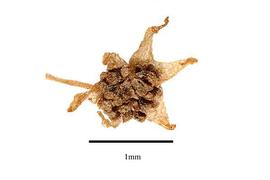
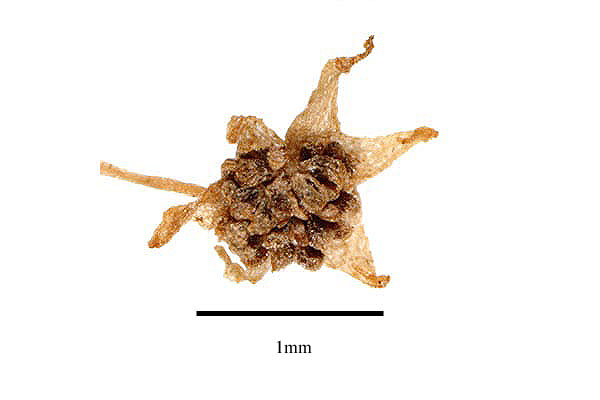
fruit or seed
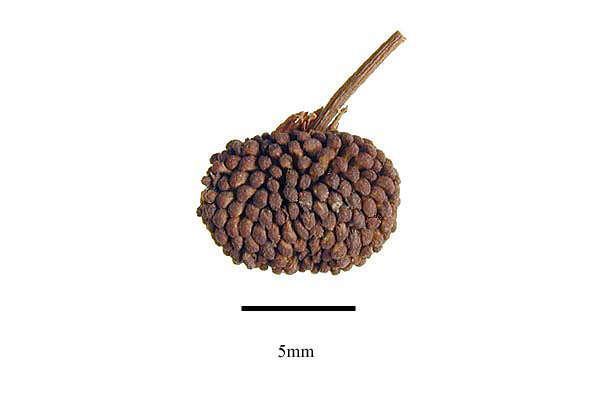
Fruit a folliclefollicle:
a dry to (rarely) fleshy fruit derived from a single carpel that opens along a single longitudinal suture, derived from a single, superior, simple ovary; the seeds may be arillate or with a fleshy testa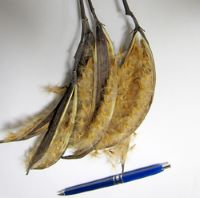 (Andruris, Hyalisma, Sciaphila, Seychellaria) or acheneachene:
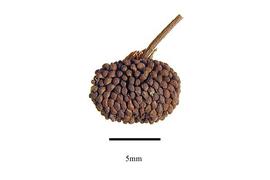
a dry, indehiscent, one-seeded fruit, with seed attached to pericarp at a single point, derived from a single, superior, simple or compound, one-loculed ovary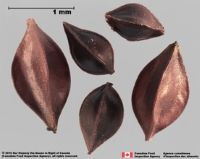 (Kupea, Lacandonia, Peltophyllum, Soridium, Triuridopsis, Triuris), simple or aggregateaggregate:
fruit formed from a single flower with carpels several and distinct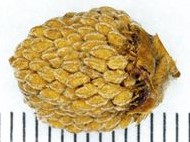 , 1.5–2 mm long, ovoidovoid:
3D shape—ovate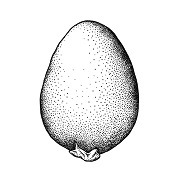 or cuneiformcuneiform:
wedge-shaped
, stylesstyle:
in a flower, the narrow and elongated part of the pistil between the stigma and the ovary; sometimes persisting in fruit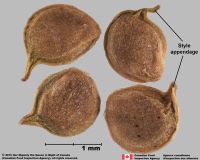 persistent, beakedbeak:
a usually firm, terminal appendage, sometimes tapered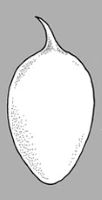 or not, with one seed. Fruits 6–50 per head and do not radiate at maturity. Pericarppericarp:
fruit wall or fruit coat
dulldull:
reflecting only a low proportion of incident light, with no apparent sheen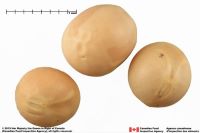 , smooth, wrinkledwrinkled:
surface relief—shallow, irregular folds and furrows covering the surface; appearing overall though crumpled and then spread out , wartywarty:
surface relief—distinct, rounded projections that are large relative to the fruit size; tuberculate, verrucose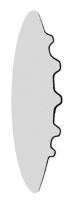 or papillatepapillate:
surface relief—bearing minute, distinct, broad-based projections, tapering to a rounded apex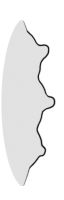 .
.
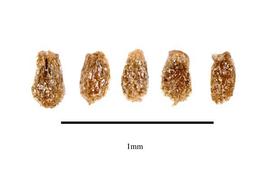
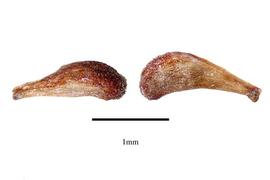
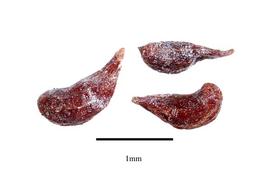
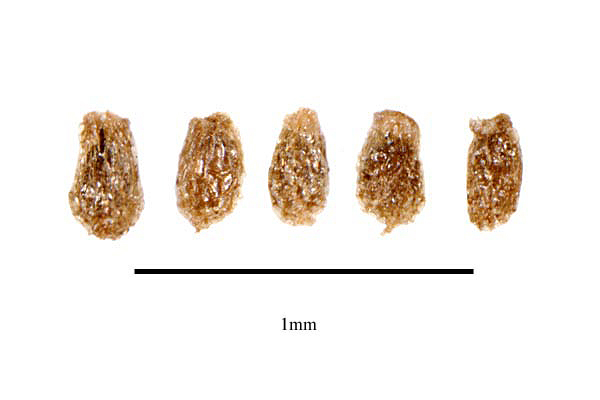
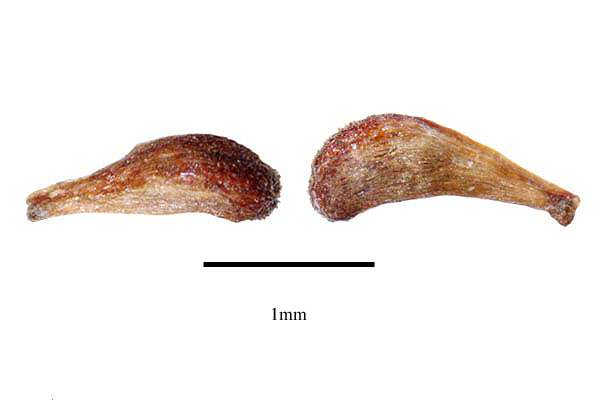
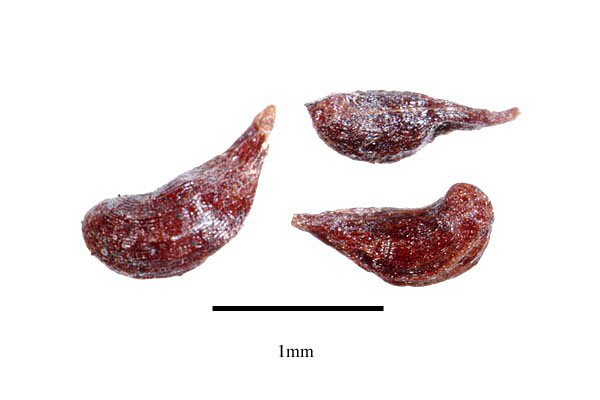
Seeds oblongoblong:
2D shape—much longer than broad with nearly parallel sides, corners are rounded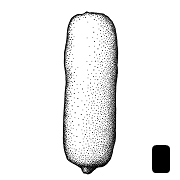 to reniformreniform:
2D or 3D shape—kidney-shaped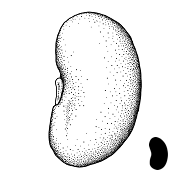 , tereteterete:
approximately circular in cross section; width and thickness approximately equal
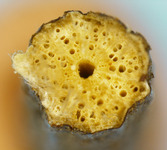 in transection, 0.7–1 mm long. Seed coat brown to black, wrinkledwrinkled:
surface relief—shallow, irregular folds and furrows covering the surface; appearing overall though crumpled and then spread out, reticulatereticulate:
surface relief—netted, raised walls or concave grooves forming a net-like surface pattern with flat, concave, or convex interspaces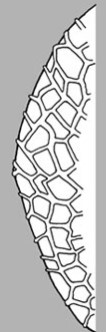 , ridgedridged:
surface relief—raised, thick ridges, sharp edged or rounded, usually in a series that may cover the entire surface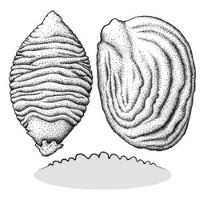 , striatestriate:
surface relief—having fine, parallel lines, grooves or ridges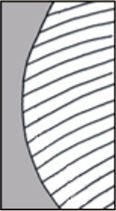 , blisteredblistered:
surface relief—covered with irregular raised, hollow granules that give the surface a bubbled appearance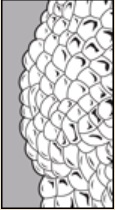 , or wartywarty:
surface relief—distinct, rounded projections that are large relative to the fruit size; tuberculate, verrucose.
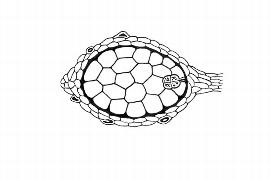
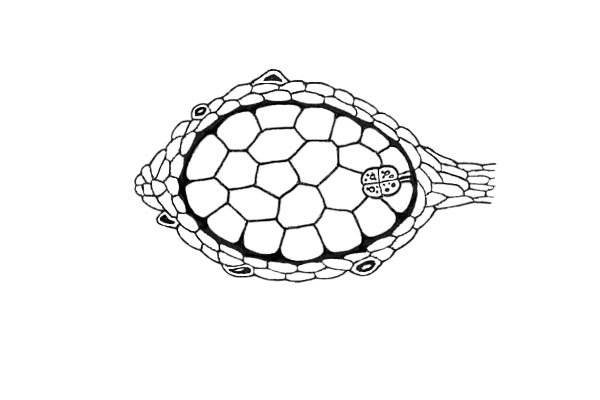
Embryo rudimentaryrudimentary:
(of embryo) embryo is small and fills less than a quarter of the seed and can be variable in shapes, such as linear, spatulate, or oval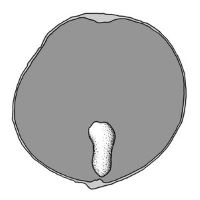 , small, globoseglobose:
3D shape—more or less spherical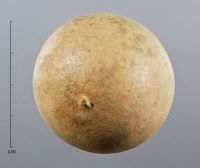 .
.
Endosperm copious.
| Fruit | |
| Type | folliclefollicle: a dry to (rarely) fleshy fruit derived from a single carpel that opens along a single longitudinal suture, derived from a single, superior, simple ovary; the seeds may be arillate or with a fleshy testa , acheneachene:a dry, indehiscent, one-seeded fruit, with seed attached to pericarp at a single point, derived from a single, superior, simple or compound, one-loculed ovary |
| Size range | 1.5–2 mm long |
| Shape(s) | ovoidovoid: 3D shape—ovate , cuneiformcuneiform:wedge-shaped |
| Surface relief | smooth, wrinkledwrinkled: surface relief—shallow, irregular folds and furrows covering the surface; appearing overall though crumpled and then spread out , wartywarty:surface relief—distinct, rounded projections that are large relative to the fruit size; tuberculate, verrucose , papillatepapillate:surface relief—bearing minute, distinct, broad-based projections, tapering to a rounded apex |
| Unique features | Small one-seeded folliclesfollicle: a dry to (rarely) fleshy fruit derived from a single carpel that opens along a single longitudinal suture, derived from a single, superior, simple ovary; the seeds may be arillate or with a fleshy testa or achenesachene:a dry, indehiscent, one-seeded fruit, with seed attached to pericarp at a single point, derived from a single, superior, simple or compound, one-loculed ovary with persistent stylesstyle:in a flower, the narrow and elongated part of the pistil between the stigma and the ovary; sometimes persisting in fruit , often pappilate. |
| Seed | |
| Size range | 0.7–1 mm |
| Shape(s) | oblongoblong: 2D shape—much longer than broad with nearly parallel sides, corners are rounded , ovoidovoid:3D shape—ovate , teardrop-shapedteardrop-shaped:2D shape—widest point is toward one end of the fruit, the other end tapers sharply to a pointed end 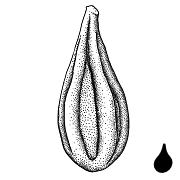 , reniformreniform: , reniformreniform:2D or 3D shape—kidney-shaped , ellipsoidellipsoid:3D shape—elliptic |
| Surface relief | wrinkledwrinkled: surface relief—shallow, irregular folds and furrows covering the surface; appearing overall though crumpled and then spread out , reticulatereticulate:surface relief—netted, raised walls or concave grooves forming a net-like surface pattern with flat, concave, or convex interspaces , ridgedridged:surface relief—raised, thick ridges, sharp edged or rounded, usually in a series that may cover the entire surface , striatestriate:surface relief—having fine, parallel lines, grooves or ridges , blisteredblistered:surface relief—covered with irregular raised, hollow granules that give the surface a bubbled appearance , wartywarty:surface relief—distinct, rounded projections that are large relative to the fruit size; tuberculate, verrucose |
| Color(s) | brown, black |
| Unique features | Small dark sculptured seeds. |
| Other | |
| Embryo | rudimentaryrudimentary: (of embryo) embryo is small and fills less than a quarter of the seed and can be variable in shapes, such as linear, spatulate, or oval , small, globoseglobose:3D shape—more or less spherical |
| Nutritive tissue | endosperm copious |
Pantropical.
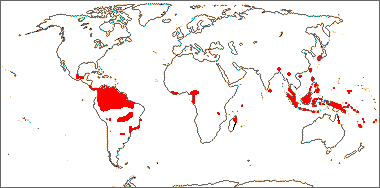
Distribution map courtesy of Angiosperm Phylogeny Website.
Baskin and Baskin 2021Baskin and Baskin 2021:
Baskin C and Baskin J. 2021. Relationship of the lateral embryo (in grasses) to other monocot embryos: A status up-grade. Seed Science Research 31 (3): 199-210. doi:10.1017/S0960258521000209; Dahlgren et al. 1985Dahlgren et al. 1985:
Dahlgren RMT, Clifford HT, and Yeo PF. 1985. The families of the monocotyledons: structure, evolution, and taxonomy. Springer-Verlag, Berlin. 520 pp.; Kirkbride et al. 2006Kirkbride et al. 2006:
Kirkbride JH, Jr, Gunn CR, and Dallwitz MJ. 2006. Family guide for fruits and seeds, vers. 1.0. Accessed September 2020-January 2022. URL: https://nt.ars-grin.gov/seedsfruits/keys/frsdfam/index.cfm .; Kubitzki et al. 1990+Kubitzki et al. 1990+:
Kubitzki K et al., eds. 1990+. The families and genera of vascular plants. 7+ vols. Berlin etc.; Nooteboom et al. 2021+Nooteboom et al. 2021+:
Nooteboom HP, de Wilde WJJO, Stevens PF, Coode MJE, and Saw LG. 2021+ Flora Malesiana Online. Accessed January 2021–March 2024. URL: https://portal.cybertaxonomy.org/flora-malesiana/; Stevenson and Loconte 1995Stevenson and Loconte 1995:
Stevenson DW and Loconte H. 1995. A cladistic analysis of monocot families. In: Rudall PJ, Cribb PJ, Cutler DF, and Humphries CJ, eds. Monocotyledons: Systematics and Evolution. Royal Botanic Gardens, Kew.; Watson and Dallwitz 1992+Watson and Dallwitz 1992+:
Watson L and Dallwitz MJ. 1992+. The families of flowering plants: descriptions, illustrations, identification, and information retrieval. Version: 6th Accessed September 2020-September 2022. URL: delta-intkey.com; Zhengyi et al. 2004+Zhengyi et al. 2004+:
Zhengyi W, Raven PH, and Deyuan H. 2004+. Flora of China [online]. 25 vols. Science Press, Beijing China & Missouri Botanical Garden, St. Louis USA. Accessed January–March 2024. http://flora.huh.harvard.edu/china/
*The number of genera and species is based on Christenhusz and Byng 2016Christenhusz and Byng 2016:
Christenhusz MJM and Byng JW. 2016. The number of known plant species in the world and its annual increase. Phytotaxa 261 (3): 201-217. https://doi.org/10.11646/phytotaxa.261.3.1, which may differ from the number of genera in GRIN-Global.
Authors: M. Islam, A. Gottlieb, M. Maher, J. Scher, A. Redford
Content last updated August 2024
idtools.org